Skip to content
You are here: Home
Earthquake in Haiti

A 7.0 earthquake struck the Haitian coast on 12 January rocking the capital affecting the cities of Port-au-Prince, Carrefour and Jacmel, all located in the West Province area which has an estimated population of 2.2 million.  The epicenter was located 22 kilometers from the capital, Port-au-Prince, a densely populated area.  A series of aftershocks have been felt and most people are in the streets, fearful of any standing structure.  

It is being reported that he number of deaths could be in the hundreds of thousands with many more injured.  Recent estimates indicate that at least three million people have been affected by the earthquake. In addition to the destruction of innumerable homes, many major structures have been reduced to rubble.  As the poorest country in the Western Hemisphere, Haiti is ill-equipped to respond to such a disaster.

“The devastation caused by the recent earthquake is beyond imagination. The survivors of this disaster desperately need our help and support, now and for the foreseeable future.  We must respond immediately and are directing all of donors to provide financial support to the following organizations,” Dr. Laila Al-Marayati

UNICEF:  www.unicef.org   and Partners in Health: http://www.standwithhaiti.org/haiti


Read more...
 
Gaza: One Year Later

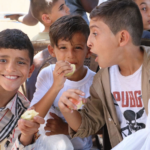
Two brothers waiting for foodPalestinians living under Israeli occupation continue to face a human dignity crisis, characterized by the erosion of livelihoods, the continued denial of basic human rights and a forced dependency on international aid that affects all aspects of their daily life.


The blockade, now in its third year, bans the movement of goods in and out of Gaza, as well as the people, many of whom are in need of medical treatment.  With the arrival of winter, families – most comprised of young children - who had their homes damaged or destroyed during the 27 December – 18 January military offensive must now endure the bitter cold either in tents or in their homes without windows, and in some instances living in makeshift tin shelters.  Over 20,000 people remain homeless.  Ordinary people bear the brunt of the blockade but primarily it is the children, 52.5% of the population and always the most vulnerable, whose fragile little bodies cannot endure the freezing temperatures.


In the whole of Gaza today, there are no sources of uncontaminated water leaving infants at risk of nitrate poisoning Mother feeding childand hundreds of thousands of people forced to buy  expensive water trucked in privately;  still others must rely on aid agencies to provide assistanceNinety per cent of the population experiences daily power cuts that are further exacerbated by the ban on generators across the border.  Ten per cent of the population has no power at all. .


John Ging, director of the United Nations Relief and Works Agency said recently, “We have run out of words to describe how bad it is here. [. . .] 750,000 children susceptible to an environment where things are moving rapidly in the wrong direction, where injustice is bewildering, and every day worse.”


Kinder USA is still working in Gaza doing what we can to care for the innocent children and their families.  Our projects continue, yet they are a drop in the sea of need. The legacy of the blockade and the destruction and loss of life will take generations to repair.  No child should have to endure this living hell.


Boys at home in tent cityFormer President Jimmy Carter said it best, “The cries of homeless and freezing people demand immediate relief. This is a time for bold action, [. . .], reconciliation and peace.”


We close another year humbled by the generosity of our donors who join us in working to bring change to the most vulnerable: the children. Under human rights law all people have the right to an adequate standard of living and the highest attainable standard of health.  Please consider a year end donation to help Kinder USA reach more children and offer the hope they need to sustain themselves through another year of hardship.


Bringing shoes to the Children in Nahr al-Bared

 Established in 1949, the Palestinian refugee camp of Nahr al-Bared in north Lebanon was home to more than 30,000 residents. In the summer of 2007, the camp was totally destroyed leaving over 20,000 homeless, some for the third time in their lives.  The vast majority of the population still have not recovered their livelihoods that were destroyed by the war, leaving many families struggling to meet basic needs for their children.


Too often we forget that the plight of the Palestinian’s is not only in the West Bank and Gaza, but very importantly in the refugee camps in Lebanon where living a life with dignity is often times elusive.  Many families who lost their homes over two and a half years ago still live in “barracks”, airless prefabricated 18 square metre steel units that consists of the bedroom, bathroom and kitchen all in one container.  Cockroaches scuttle across the cracks in the wooden floor and the smell of sewage seeps from the flooring.

 As the winter approaches, with snow capped mountains in the distance, most of the children run through the muddy passage ways in the camp wearing only socks and plastic slippers.  Last year, Kinder USA chairwoman Dr. Laila Al-Marayati and Kinder’s Executive Director distributed 2700 coats to the children and this November returned to distribute shoes.  Over 2,400 children aged 7-12 were able to shop for shoes from distribution centers just in time for Eid!  Not only were the children pleased, but the mothers found comfort in knowing their child can run freely without risk of injury or illness due to lack of shoes. 


Kinder USA is asking that you donate what you can to contribute to the cost of this greatly needed project.   The smile on these children’s faces says it all.


“We are all responsible for the well-being of these children.  Our humanity calls upon us to do what it takes to care for them.  The forgotten children of Nahr El Bared deserve what many around the world take for granted: their basic rights," said Dr. Laila Al-Marayati. 


<< Start < Prev 1 2 3 4 5 6 7 8 9 10 Next > End >>

Page 3 of 15

Newsletter Subscribe

Name:

E-mail:

Donations